Product benefits
- The original Burns recipe from 1993
- Developed by Veterinary Surgeon; John Burns
- Award-winning recipe
- Natural and complete diet
- Hypoallergenic
- Highly digestible
- Suitable for sensitive dogs
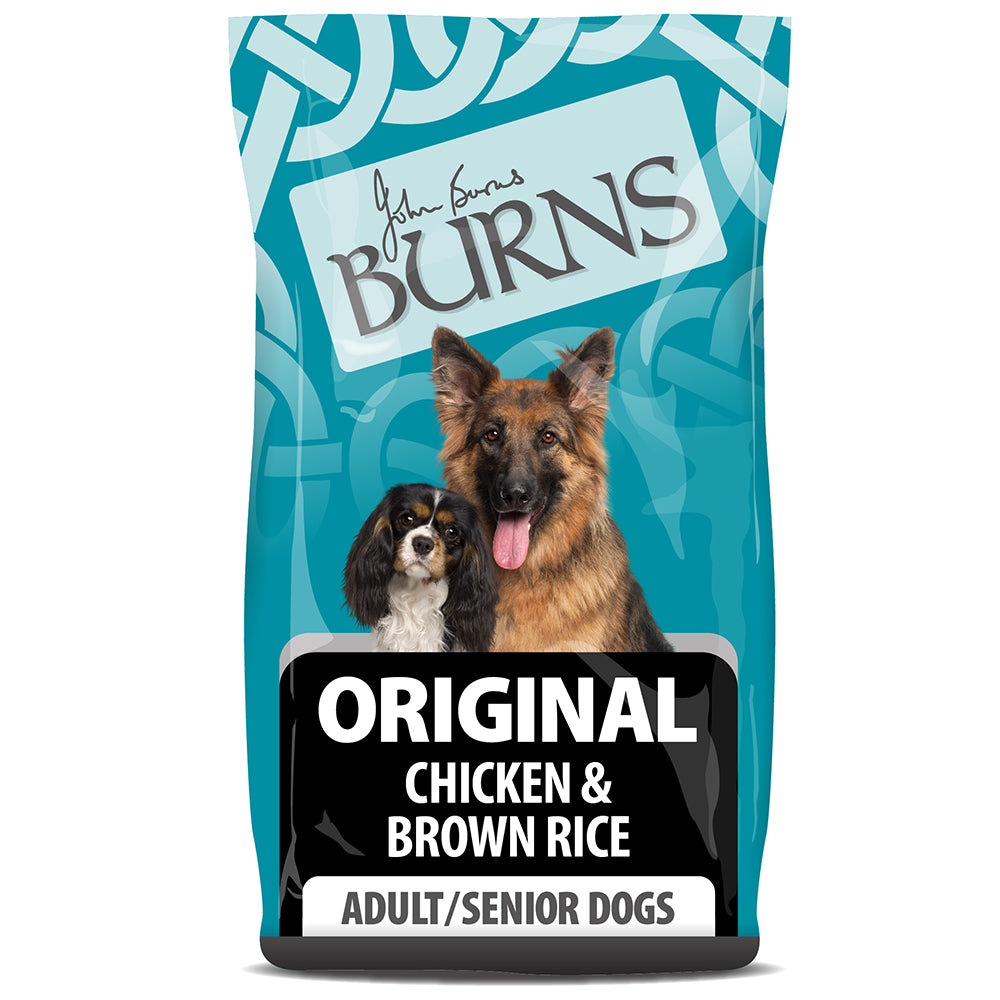
Our bestselling product is the trusted food of choice for thousands of dogs across the country. Original Chicken was the first recipe we ever made back in 1993 and includes a combination of simple ingredients including chicken, brown rice; oats; and peas. Delicious and nutritious for your dog.
Composition
Brown Rice (67%), Chicken Meal (20%), Oats, Peas, Chicken Oil, Sunflower Oil, Seaweed, Minerals.
Analytical Constituents
Crude Protein 18.5%, Crude Fat 7.5%, Crude Fibre 2.2%, Crude Ash 6%, Copper 21mg/kg, Sodium 0.26%, Calcium 1.1%, Phosphorus 0.9%, Magnesium 0.14%, Potassium 0.6%, Omega-6 fatty acids 1.6%, Omega-3 fatty acids 0.16%.
Nutritional Additives (per kg)
Vitamin A 25000IU, Vitamin D3 2000IU, Vitamin E 100IU, Taurine 1000mg, Trace Elements: Iodine (calcium iodate anhydrous) 1mg, Manganese (manganous chelate of amino acids hydrate) 20mg, Zinc (zinc chelate of amino acids hydrate) 50mg.
Technological Additives
Antioxidants (mixed tocopherols).
Feeding Guide: Adult Dogs
| Body Weight |
Adult (9 Months+) |
Senior |
| 5kg |
50g |
40g |
| 10kg |
100g |
80g |
| 15kg |
150g |
120g |
| 20kg |
200g |
160g |
| 30kg |
300g |
240g |
| 40kg |
400g |
320g |
| 50kg |
up to 500g |
400g |
The starting point for calculating feeding amounts:
- Adult : 10g per 1kg of body weight per day
- Senior : 8g per 1kg of body weight per day
Reasons to reduce: neutered, senior, less active, ongoing health problem, overweight, warm environment, fussy dog, barking, persistent moulting or hyperactivity.
Switching to Burns: A Gradual Transition Guide
Changing your dog's food too quickly can cause temporary digestive upset. A slow, staged introduction helps your dog adjust comfortably.
Suggested 7-Day Schedule
| Days |
Previous Food |
Burns Original Chicken |
| 1–2 |
75% |
25% |
| 3–4 |
50% |
50% |
| 5–6 |
25% |
75% |
| 7+ |
0% |
100% |
What to Watch For
Some dogs take longer to adjust than others. During the transition, keep an eye out for:
- Loose stools or changes in stool frequency
- Reduced appetite for the first day or two
- Mild flatulence
These signs are usually temporary. If they persist beyond a few days, slow the transition further by extending each stage by an extra day or two.
Tips for Individual Dogs
- Some dogs — particularly those with sensitive stomachs — may need a longer transition of up to 14 days.
- Puppies, seniors, and dogs recovering from illness may also benefit from a slower switch.
- Keep fresh water available at all times throughout the transition.
If your dog shows persistent vomiting, diarrhoea, or significant loss of appetite during the switch, consult your veterinarian for personalised guidance.